


Tray and plateau formers for corrugated board
A tray former folds and glues a tray from a flat cardboard blank. It is the most common end-of-line machine in fruit and vegetable packing: standard plateaux, Citrus trays, trays with reinforced corners and display trays.
Frei supplies six TECO tray and plateau formers. They differ mainly in the type of tray, the hourly output, the compressed-air consumption and how formats are changed.
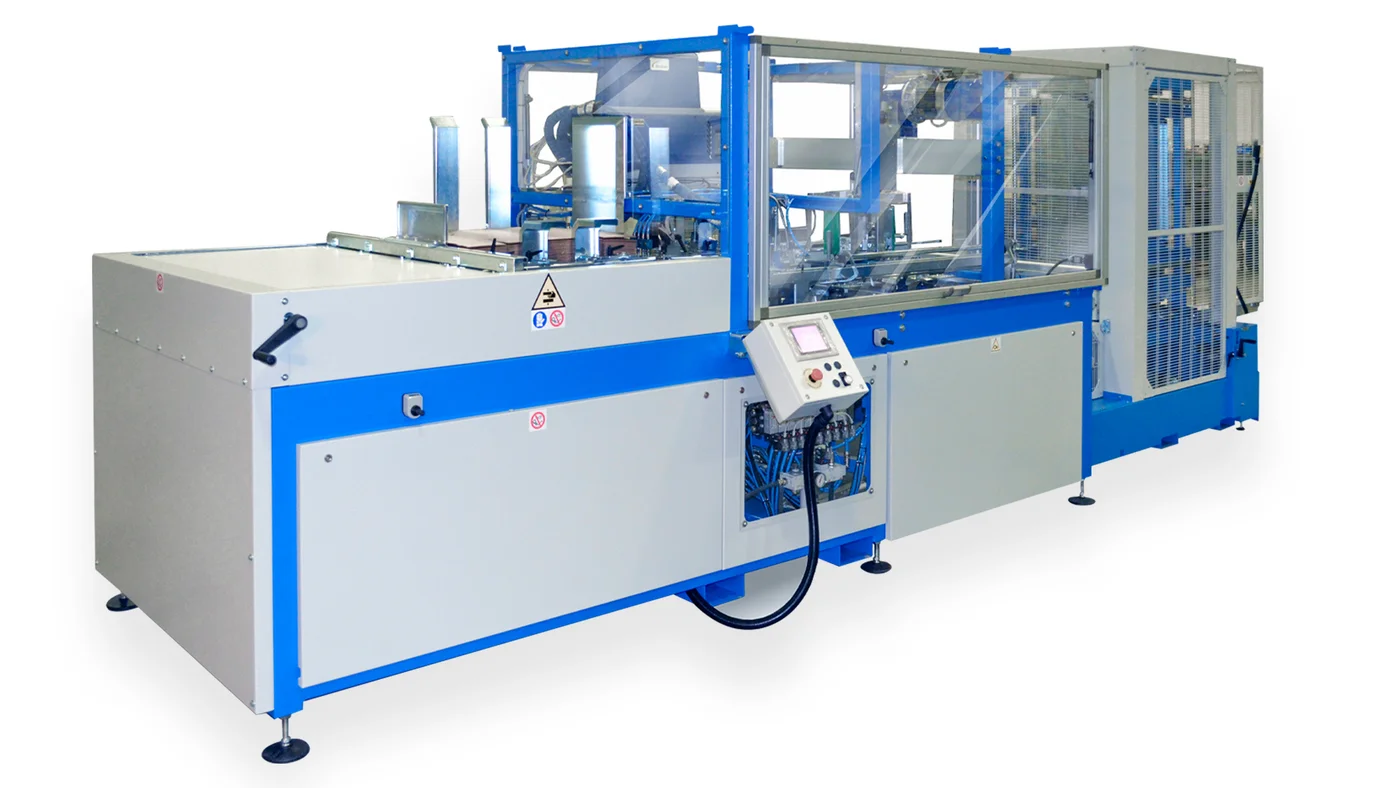
T2N
Automatic tray former
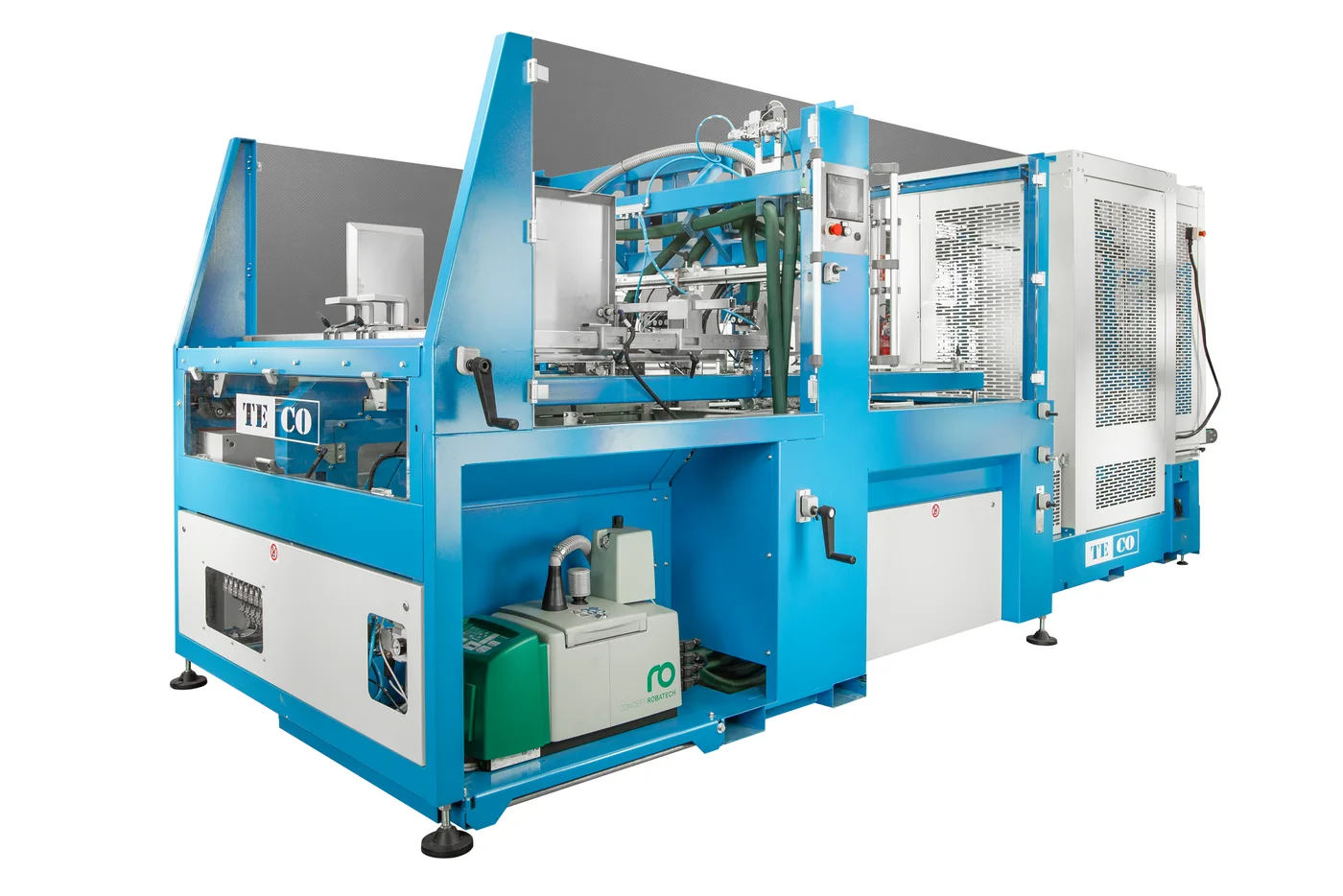
T2K
Corrugated plateau former
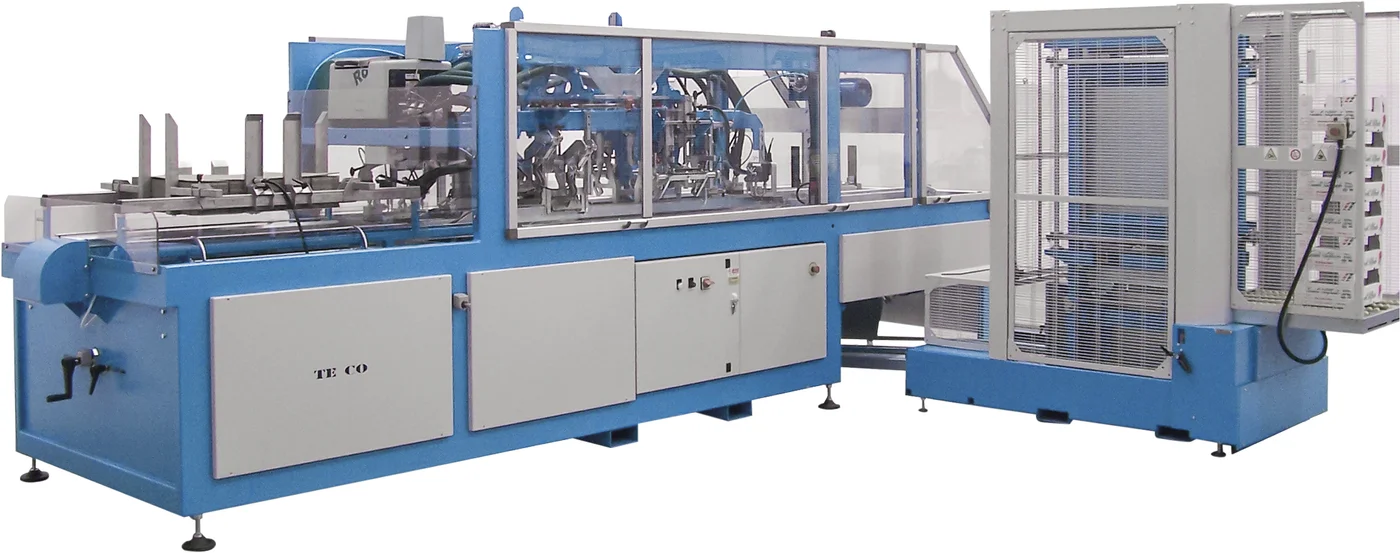
T3
Tray former for reinforced corners
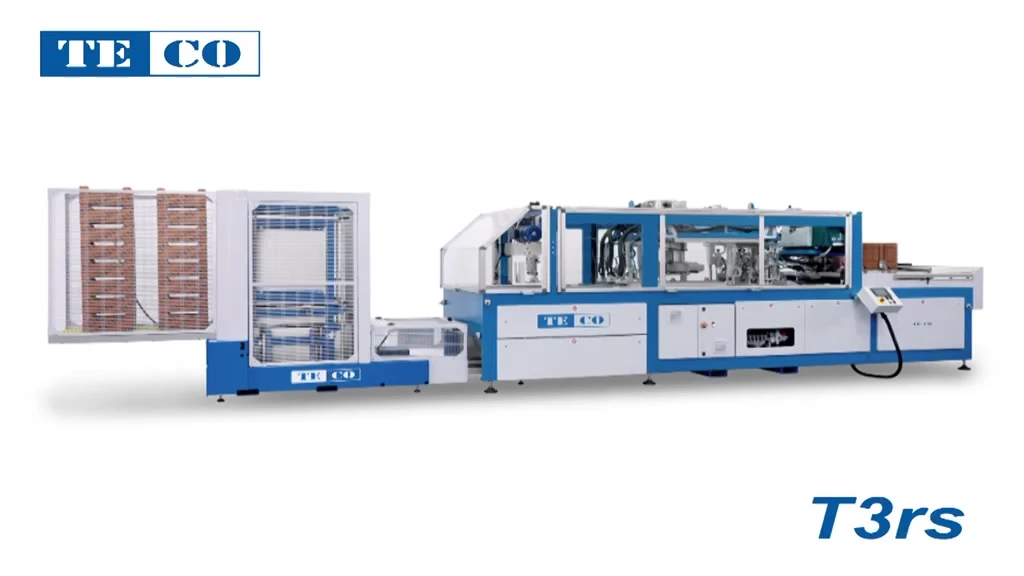
TECO T3rs (TEC3)
Servo-driven tray former
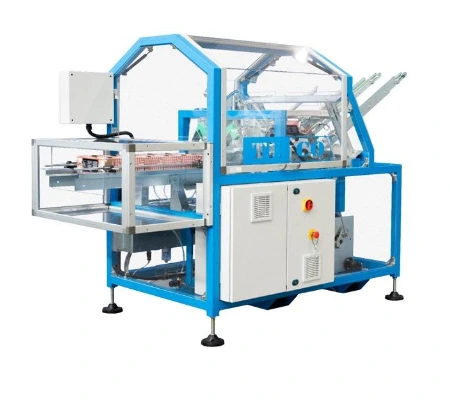
TECO ST240
Glue-free tray former
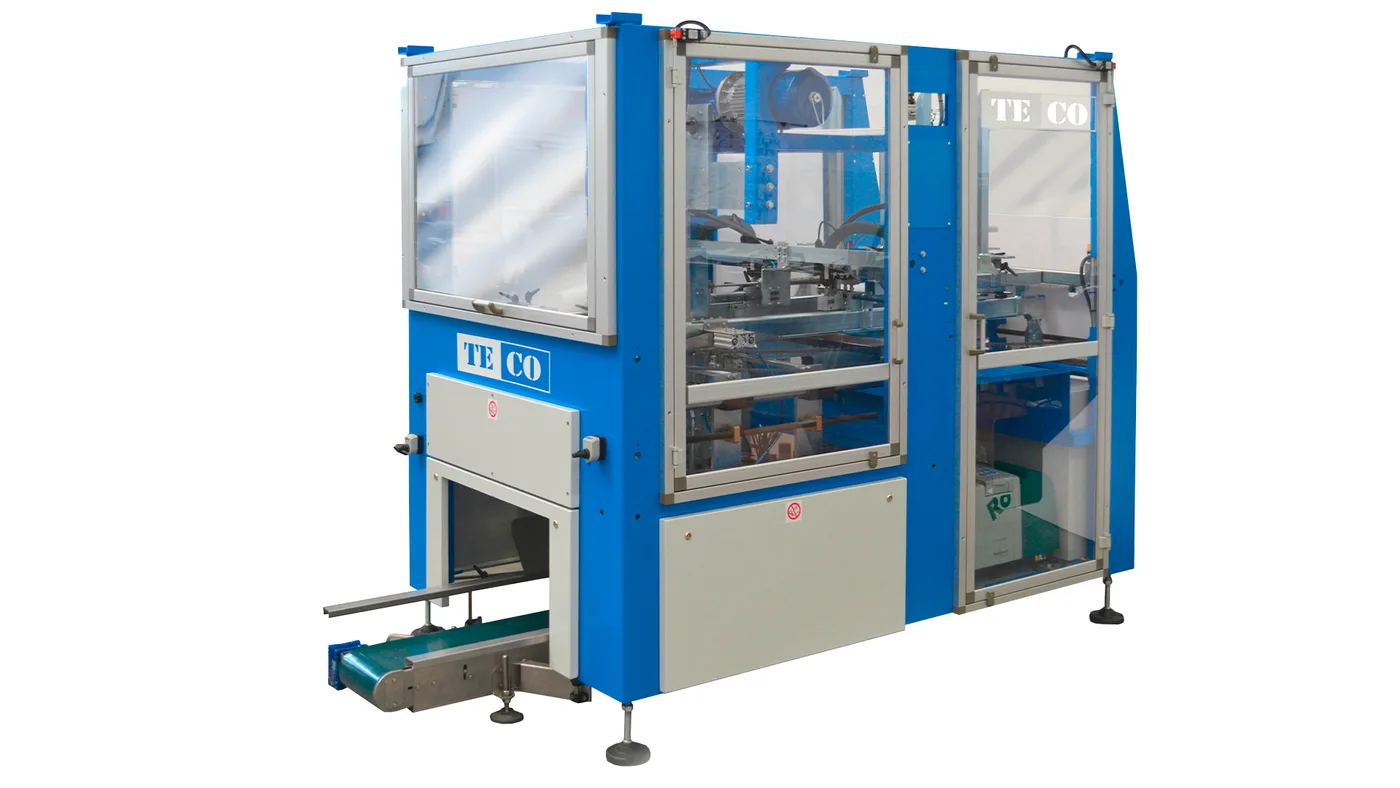
FT2K
Compact plateau former
| Model | Type | Maximum output | |
|---|---|---|---|
| T2N | Automatic tray former | 2,400 units/h | Details T2N |
| T2K | Corrugated plateau former | 2,400 units/h | Details T2K |
| T3 | Tray former for reinforced corners | 2,100 units/h | Details T3 |
| T3rs (TEC3) | Servo-driven tray former | 2,400 units/h | Details T3rs |
| ST240 | Glue-free tray former | 2,100 units/h | Details ST240 |
| FT2K | Compact plateau former | 3,300 units/h | Details FT2K |
Which one to choose
Standard plateaux and quick format changes: T2N
up to 2,400 trays per hour, the usual choice for classic plateaux.
Same speed, less compressed air: T2K
2,400 trays per hour on 7.3 m³/h of air instead of the T2N’s 40.8: it adds up on long shifts.
Trays with reinforced corners: T3
for tall pallets and cold stores, up to 2,100 trays per hour; options can be added after purchase.
Many format changes a day: TECO T3rs (TEC3)
brushless servo adjustments and formats recalled from digital recipes.
Glue-free trays: TECO ST240
self-locking trays without hot-melt: the tray stays pure cardboard and is easier to recycle.
Small trays and compact plateaux at high speed: FT2K
up to 3,300 units per hour, between a punnet former and a plateau former.
Frequently asked questions
What is a tray former?
A tray former is an automatic end-of-line machine that takes a flat cardboard blank from its magazine, folds it, glues it with hot-melt adhesive and delivers a tray ready to be filled. In fruit and vegetable packing it forms plateaux, Citrus trays, trays with reinforced corners and display trays.
What is the difference between the TECO T2N and the TECO T3?
The T2N is built for standard plateaux and reaches 2,400 trays per hour. The T3 forms trays with reinforced corners, which hold up better on tall pallets and in cold stores, and reaches 2,100 trays per hour. For simple formats choose the T2N; for a stronger pack, the T3.
How many trays per hour does a TECO tray former make?
The TECO tray and plateau formers supplied by Frei make 2,100 to 3,300 units per hour: 2,100 for the T3 and ST240, 2,400 for the T2N, T2K and T3rs, and 3,300 for the FT2K. Actual output depends on the format and configuration.
Can cardboard trays be formed without glue?
Yes. The TECO ST240 forms self-locking trays closed by interlocking tabs, with no hot-melt glue. The tray stays pure cardboard, which is easier to recycle, and the line has no glue consumption or gluing-system maintenance. It makes up to 2,100 trays per hour.
Service, spare parts and gluing
Every machine comes with technical service from Merano: the line +39 335 5629777 answers around the clock. For original spare parts, send us the model and the part name. Hot-melt gluing is completed by the Glutec My Feeder Cube granule feeder.
Related guide: Tray Former vs Case Erector: Which to Choose
Other families: Punnet and basket formers · Lid formers, case erectors and crate erectors
Request a quoteContact Us
Head office
Via Johann Kravogl 28, 39012 Merano (BZ), Italy